Radiating discomfort
Pain that travels from the lower back into the buttock or leg may suggest nerve irritation and deserves focused evaluation.
West Hollywood · Non-surgical disc care
Controlled traction. Careful screening. A plan built around your diagnosis.
Chattanooga DTS spinal decompression may be incorporated when disc pressure, nerve irritation, or persistent radiating symptoms call for a more focused conservative approach.

Understanding decompression
Spinal decompression is a form of motorized traction that applies controlled pull-and-release cycles to the spine. The position, force, angle, and progression are selected around the involved region and patient tolerance.
It is not a stand-alone answer for every type of back pain. We first determine whether symptoms appear disc-related, whether neurologic findings require referral, and whether decompression fits safely within a broader care plan.
Explore our CBP® structural approachWhat patients often notice
The location of pain alone does not reveal whether the primary driver is a disc, joint, nerve, muscle, or another condition.
Pain that travels from the lower back into the buttock or leg may suggest nerve irritation and deserves focused evaluation.
Disc-related symptoms may become more noticeable with prolonged sitting, driving, bending, or transitions.
Sensory changes can help identify the involved region but require neurologic assessment rather than assumptions.
Repeated episodes may reflect unresolved loading, movement, conditioning, or structural factors.
Your evaluation
We screen for candidacy before recommending the table, and we explain when another form of care or referral makes more sense.
We review onset, aggravating positions, prior imaging, treatment response, health history, and functional limitations.
Orthopedic, neurologic, movement, and chiropractic findings help clarify the likely pain generator.
Existing MRI or X-ray findings are reviewed when relevant; new digital X-rays are taken only when clinically appropriate.
We discuss whether decompression, corrective care, rehabilitation, co-management, or referral is the best next step.
Personalized care
The exact combination depends on your findings rather than a pre-set package.
Computer-controlled traction allows gradual, repeatable protocols based on region, tolerance, and response.
When appropriate, chiropractic care supports joint motion and addresses mechanical restrictions around the involved area.
Condition-specific exercises build control, endurance, and confidence as symptoms and capacity change.
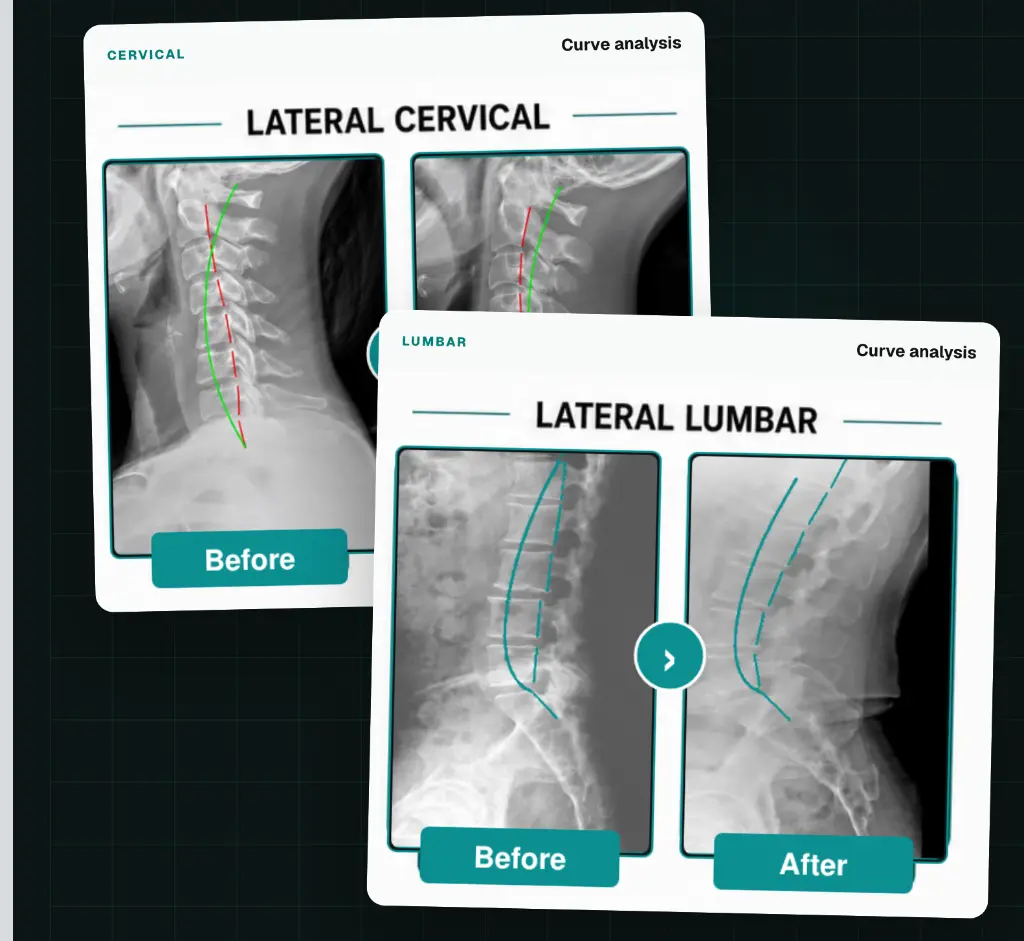
Posture and curve findings may be addressed when they appear relevant to how the spine is being loaded.
Objective findings
Disc bulges are common and do not always explain symptoms. We connect imaging, neurologic findings, movement, and response to care before refining recommendations.
Imaging is used only when clinically appropriate. Individual results vary.
Is this the right next step?
Decompression may be considered when persistent back or neck symptoms appear disc-related and conservative care is appropriate.
Clinical review
This page reflects the evaluation and treatment approach used by Dr. Sam Shirazi, DC and Dr. Ali Pourpezheshege, DC at Back to Total Health West Hollywood.


Common questions
Non-surgical spinal decompression uses computer-controlled traction to gently change spinal loading through planned cycles of pull and relaxation. At our West Hollywood office, it is performed with Chattanooga DTS equipment and is recommended only after appropriate screening.
No. Decompression is a controlled traction therapy. Chiropractic adjustments address joint motion, while corrective rehabilitation and traction may address other mechanical or structural findings. A plan may include one or several of these approaches.
There is no universal number. Recommendations depend on the diagnosis, duration and severity of symptoms, examination findings, tolerance, goals, and response to care.
No. Imaging findings alone do not determine candidacy. Your symptoms, neurologic examination, health history, stability, and any contraindications must also be considered.
West Hollywood · Ready when you are
Schedule an evaluation to understand your findings, options, and appropriate next steps.