Postural fatigue
Difficulty maintaining a comfortable upright position during work, driving, or daily activity.
West Hollywood · Corrective rehabilitation
Reinforce better posture, movement, and spinal mechanics.
Condition-specific exercise and corrective traction help translate clinical findings into stronger movement patterns and more durable function.

More than generic exercise
A general exercise can be useful, but it may not address the specific curve, translation, rotation, mobility, or control pattern found during the examination.
Corrective rehabilitation connects each exercise or traction setup to the patient’s findings, tolerance, stage of care, and functional goals.
Explore our CBP® structural approachWhat patients often notice
An evaluation determines whether corrective rehabilitation is appropriate and which movements should be emphasized or avoided.
Difficulty maintaining a comfortable upright position during work, driving, or daily activity.
Muscular guarding that repeatedly returns with the same movement or posture demands.
Restricted spinal or regional movement that affects activity, exercise, or daily function.
Difficulty coordinating the trunk, shoulders, pelvis, or lower extremities efficiently.
Loss of confidence, endurance, or capacity following a painful episode.
A need to reinforce improved posture and mechanics alongside adjustments or traction.
Your evaluation
The examination helps identify which movements are limited, poorly controlled, provocative, or important to the corrective plan.
Connect rehabilitation to the patient’s symptoms, structural findings, activities, and desired outcomes.
Observe balance, mobility, control, endurance, and symptom response.
Choose exercise, traction, mobility, stabilization, or coordination work according to need.
Make sure each movement is understood, comfortable, and performed with appropriate form.
Adjust load, duration, complexity, and frequency as capacity improves.
Personalized care
Rehabilitation may stand alone or support other elements of care when clinically appropriate.
Movements selected to address the patient’s individual postural and biomechanical pattern.
Customized positioning and loading designed around spinal curves and structural findings.
Restore useful motion while developing the ability to control it under everyday demands.
Build capacity gradually so improved mechanics are easier to sustain.
Clear instructions for exercises or positional strategies outside the clinic.
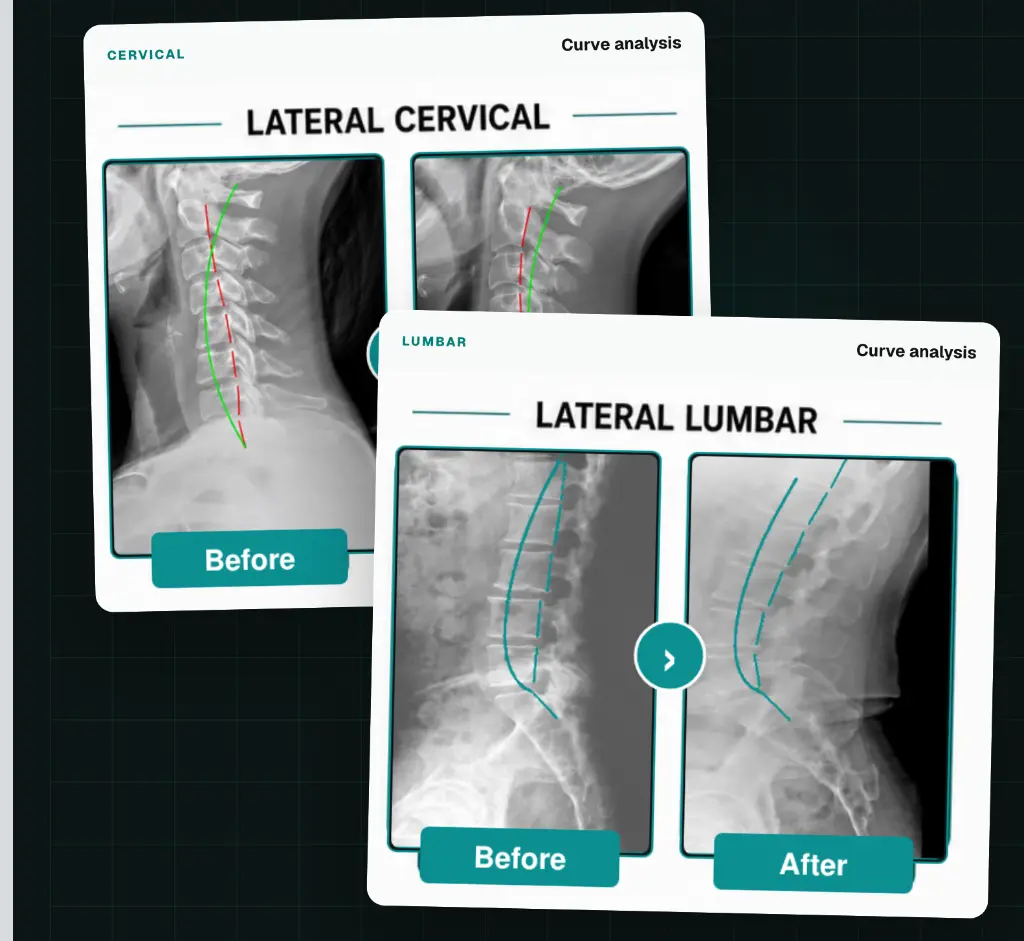
Review movement, symptoms, function, and structural measurements when appropriate.
Objective findings
Rehabilitation is refined according to symptom response, movement quality, functional capacity, and objective re-evaluation when appropriate.
Imaging is used only when clinically appropriate. Individual results vary.
Is this the right next step?
Corrective rehabilitation may be considered for patients whose examination shows a mechanical, postural, mobility, or control pattern that can be safely addressed through exercise or traction.
Clinical review
This page reflects the evaluation and treatment approach used by Dr. Sam Shirazi, DC and Dr. Ali Pourpezheshege, DC at Back to Total Health West Hollywood.


Common questions
No. It is chiropractic rehabilitation delivered within the scope of the chiropractic care plan. Patients who need physical therapy or another specialist are referred when appropriate.
No. Exercises and traction are selected according to findings, tolerance, goals, and stage of care.
Not necessarily. The appropriate combination of care is determined after the evaluation.
Home care may be recommended when it supports the plan and can be performed safely and correctly.
Progress may include changes in symptoms, posture, movement, endurance, activity tolerance, examination findings, and imaging when clinically necessary.
West Hollywood · Ready when you are
Schedule an evaluation to understand your findings, options, and appropriate next steps.