Foot or arch discomfort
Symptoms may become noticeable with prolonged standing, walking, training, or footwear changes.
West Hollywood · Digital foot scan & orthotics
Measure the foundation beneath your posture.
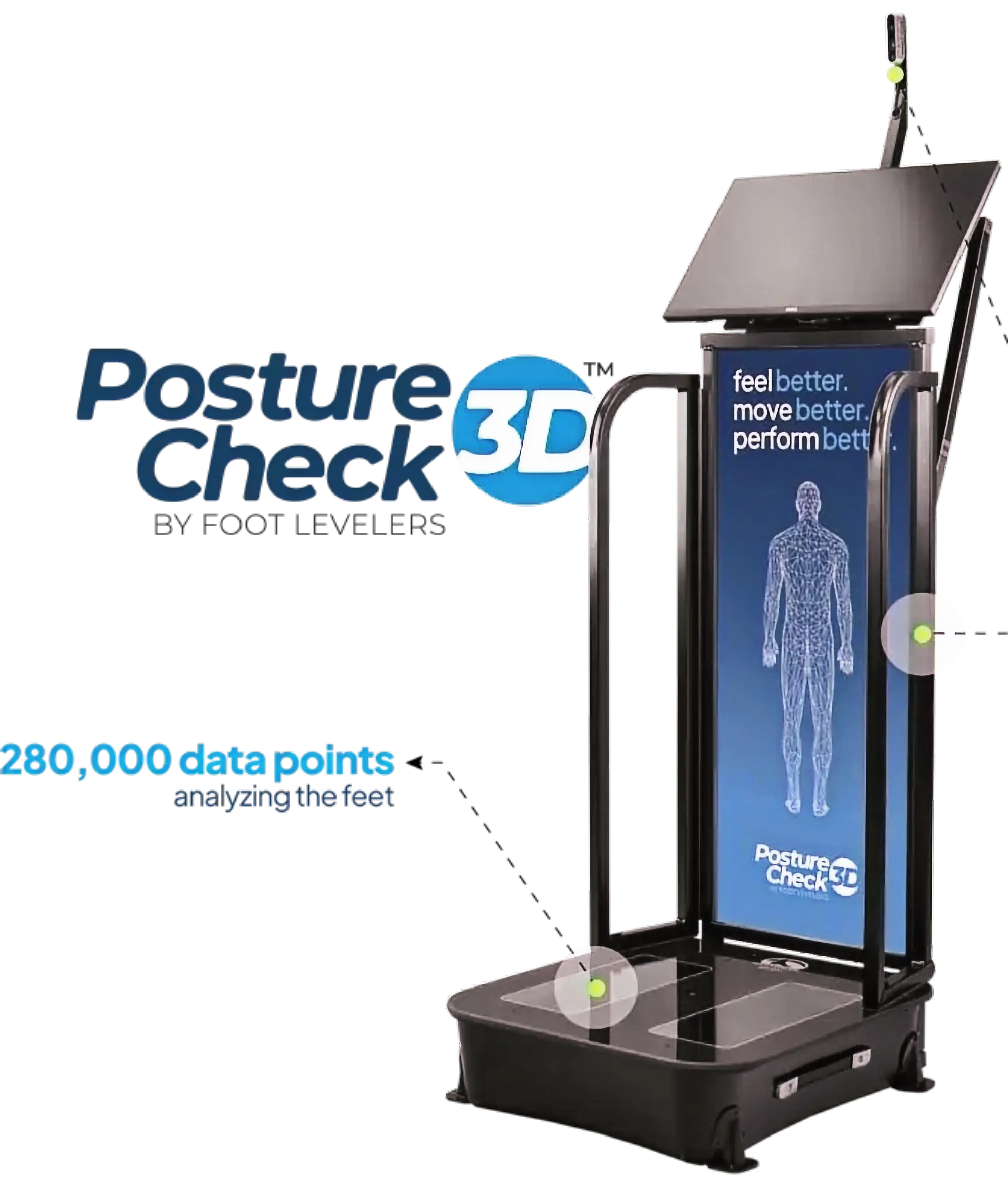
Our process combines Foot Levelers digital scanning with posture, gait, and structural analysis. When clinically appropriate, standing X-rays help evaluate pelvic leveling and whether a precise heel lift should be incorporated.
Why the foundation matters
The feet provide a changing base of support during standing and movement. Arch loading, asymmetry, footwear, joint mobility, and activity demands can influence how forces are distributed through the ankles, knees, hips, pelvis, and spine.
That does not mean every back or knee problem begins in the feet. Our West Hollywood process determines whether foot mechanics are meaningfully connected to your symptoms and whether custom support belongs in the plan.
Explore our CBP® structural approachWhat patients often notice
Symptoms do not confirm the need for orthotics by themselves, but they help us decide what should be assessed.
Symptoms may become noticeable with prolonged standing, walking, training, or footwear changes.
Lower-extremity loading and foot mechanics can influence stress at the knees and hips during movement.
Posture or standing X-rays may show asymmetry that deserves further evaluation before a lift is prescribed.
A ground-up contribution may be relevant when back symptoms coexist with gait, foot, leg-length, or pelvic findings.
Your evaluation
The scan is valuable, but the clinical decision comes from connecting several measurements.
Foot Levelers Posture Check 3D maps pressure distribution, arch loading, and left-to-right differences.
We assess standing alignment, movement, footwear, activity demands, and how the feet interact with the rest of the body.
When clinically appropriate, standing imaging helps evaluate sacral base, femoral head height, pelvic leveling, and spinal compensation.
Orthotic design and any heel lift are selected around the combined findings, footwear, tolerance, and goals.
Personalized care
Every component has a specific role; not every patient needs every correction.
A personalized device is fabricated to support the individual foot profile, daily demands, footwear, and clinical goals.
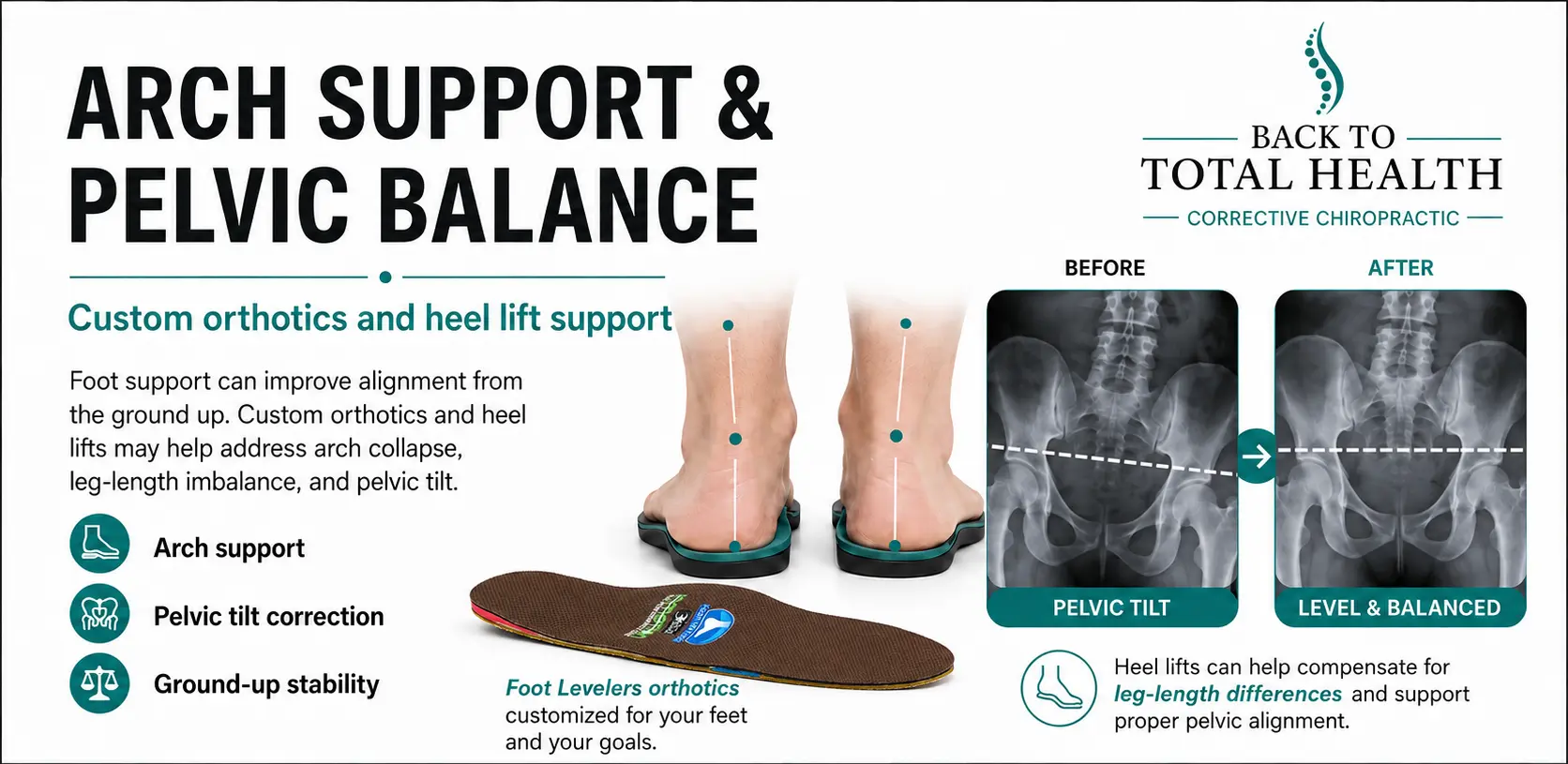
A measured lift may be incorporated when meaningful leg-length or pelvic-leveling findings support compensation.
Relevant pelvic, spinal, or joint restrictions may be addressed alongside the ground-up support strategy.
The plan may include footwear selection, break-in progression, mobility, strengthening, and activity-specific recommendations.
Objective findings
When structural asymmetry is clinically relevant, standing X-ray analysis can help determine whether pelvic unleveling is present and whether a specific heel-lift correction should be tested and incorporated.
Imaging is used only when clinically appropriate. Individual results vary.
Is this the right next step?
A digital scan can be useful when symptoms, posture, footwear, or activity suggest that the feet may be influencing the chain above.
Clinical review
This page reflects the evaluation and treatment approach used by Dr. Sam Shirazi, DC and Dr. Ali Pourpezheshege, DC at Back to Total Health West Hollywood.


Common questions
The Foot Levelers digital scan maps plantar-pressure distribution and provides information about arch loading and asymmetry while standing. It is one part of the examination and is interpreted alongside posture, gait, symptoms, and structural findings.
No. X-rays are considered only when clinically appropriate and when pelvic, sacral, spinal, or leg-length information would meaningfully affect the orthotic or heel-lift recommendation.
No. A heel lift is added only when examination and structural analysis indicate that a specific amount of lift is appropriate. Adding a lift without adequate assessment can create a new imbalance.
An over-the-counter insert provides generalized cushioning or support. This process combines a digital foot scan, clinical examination, postural assessment, and X-ray analysis when indicated to customize the orthotic and any heel-lift correction.
West Hollywood · Ready when you are
Schedule an evaluation to understand your findings, options, and appropriate next steps.