Stiffness and restricted motion
Difficulty turning, looking up, or staying in one position can reflect several mechanical contributors.
West Hollywood · Neck pain care
Recurring stiffness, tension, headaches, or injury deserve a clearer explanation.
Neck pain can come from several overlapping sources. We evaluate movement, joints, muscles, nerves, posture, and cervical structure before recommending care.
A better starting point
Stiffness after sleep, tension after work, headaches, restricted rotation, or pain after an injury can have different contributing factors. Treating every presentation the same can miss what makes your problem distinct.
Our West Hollywood evaluation considers cervical motion, joint function, neurologic findings, muscle performance, posture, previous injury, and spinal curves when imaging is clinically appropriate.
Explore our CBP® structural approachWhat patients often notice
Your symptom behavior helps us decide what needs closer examination and whether chiropractic care is appropriate.
Difficulty turning, looking up, or staying in one position can reflect several mechanical contributors.
Upper cervical, muscular, postural, and other factors may contribute and should be differentiated carefully.
Pain, tingling, numbness, or weakness into the shoulder or arm requires focused neurologic screening.
Whiplash, sports injuries, and previous trauma may change movement, sensitivity, and tolerance over time.
Your evaluation
We use the examination to determine whether the problem appears mechanical, whether imaging would add value, and whether another provider should be involved.
We review symptom onset, injury, headaches, arm symptoms, work setup, sleep, activity, and prior care.
Range of motion, orthopedic, neurologic, posture, and chiropractic findings help clarify the pattern.
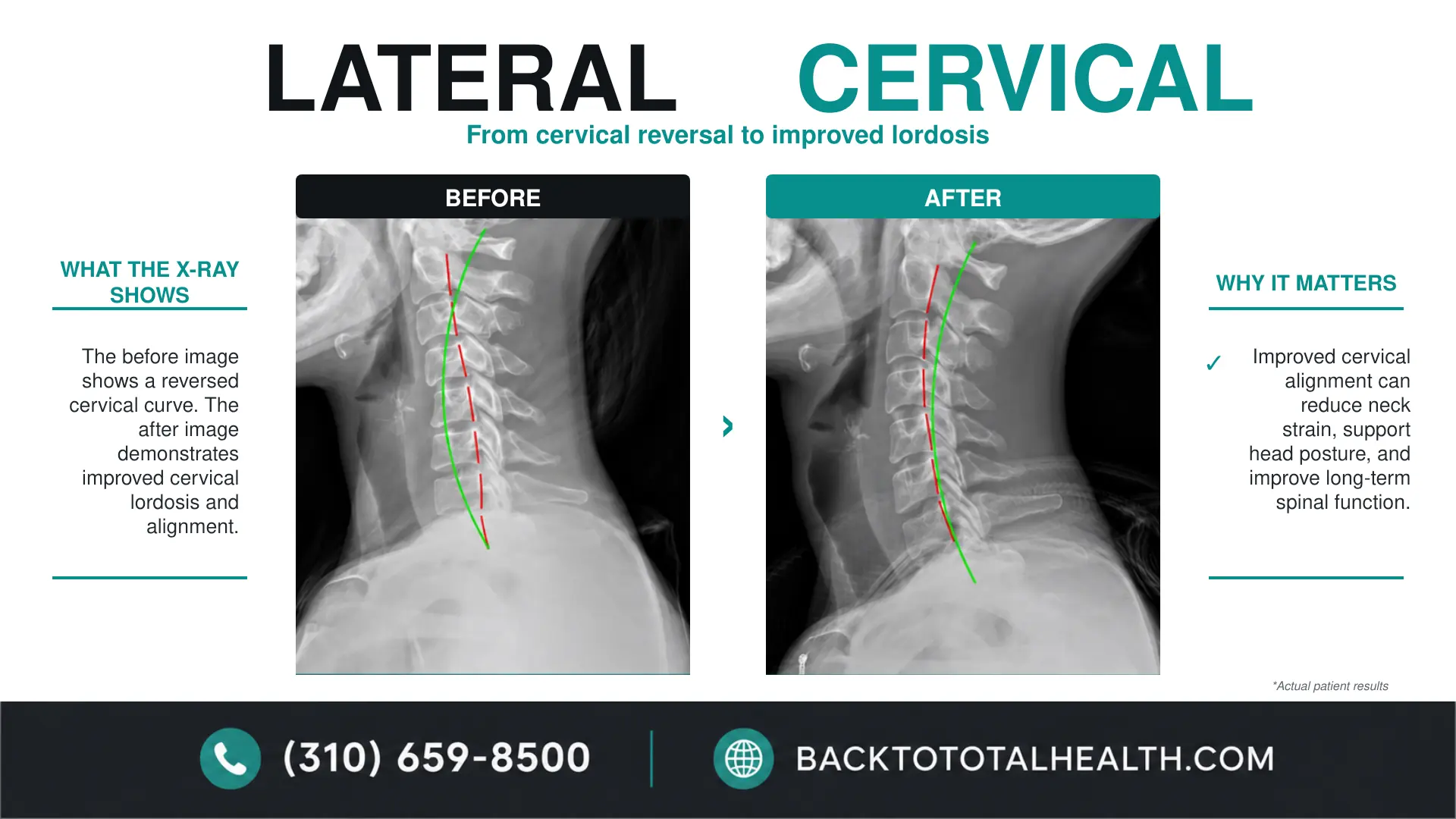
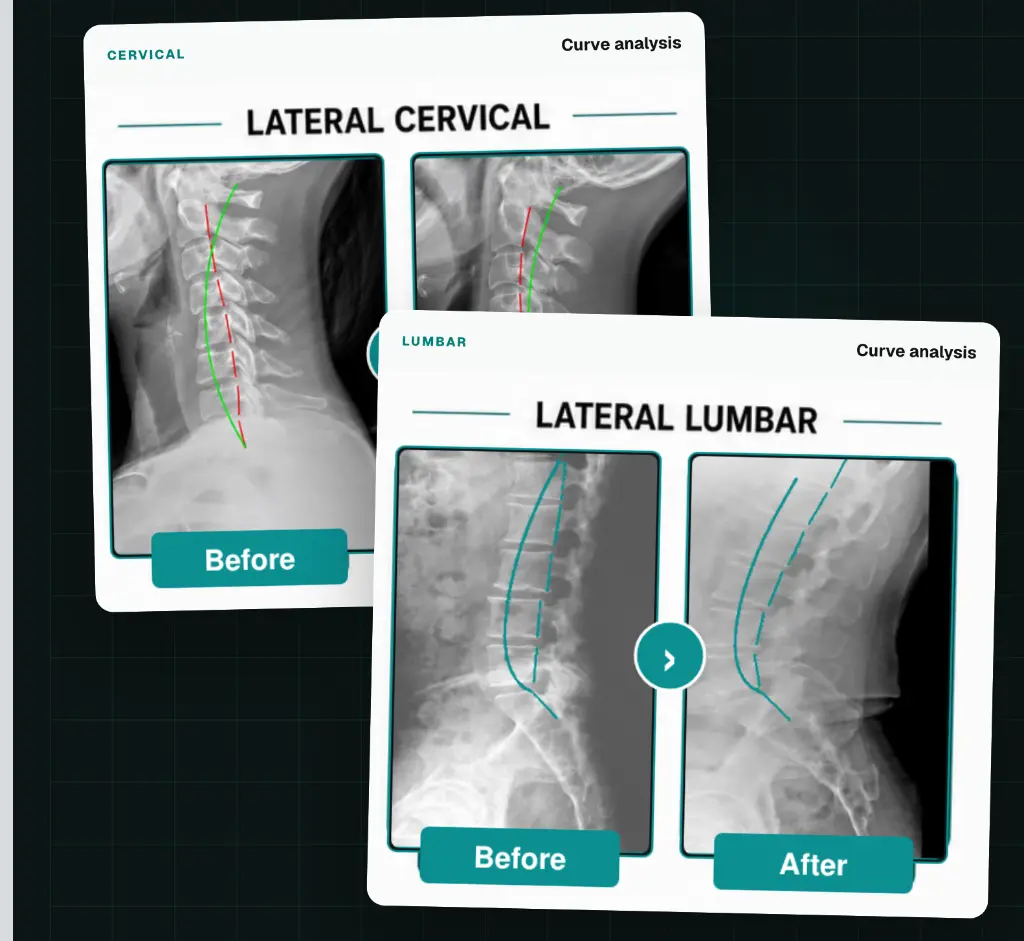
Digital X-rays may help assess cervical curves, alignment, degeneration, or the effects of prior trauma.
Findings, options, comfort preferences, checkpoints, and referrals are discussed before care begins.
Personalized care
The combination and intensity of care are adjusted to the diagnosis, irritability, tolerance, structure, and goals.
Technique and force are selected around examination findings, patient comfort, and clinical appropriateness.
Exercises may address movement control, endurance, shoulder support, and tolerance for daily demands.
CBP® traction may be considered when measurable curve or posture findings warrant structural correction.
Practical changes to desk, phone, driving, sleep, and training habits can help reduce repeated strain.
Objective findings
Not every neck complaint requires X-rays or corrective traction. When cervical structure is clinically relevant, objective findings allow recommendations and progress checks to be more precise.
Imaging is used only when clinically appropriate. Individual results vary.
Is this the right next step?
You do not have to wait until neck pain becomes severe to understand why it keeps recurring.
Clinical review
This page reflects the evaluation and treatment approach used by Dr. Sam Shirazi, DC and Dr. Ali Pourpezheshege, DC at Back to Total Health West Hollywood.


Common questions
Neck pain may involve joint restriction, muscular strain, prolonged posture, disc irritation, prior injury, reduced movement tolerance, or altered cervical alignment. The examination helps distinguish among these factors.
No. Posture can influence spinal loading, but it is one part of a broader clinical picture that also includes symptoms, movement, neurologic findings, health history, and daily demands.
Not automatically. The first visit is designed to understand your history and findings. Any treatment recommendation is discussed after appropriate evaluation and with your comfort and consent.
Digital imaging may be considered when trauma, persistent or unusual symptoms, neurologic findings, structural concerns, or care-planning needs make it clinically useful.
West Hollywood · Ready when you are
Schedule an evaluation to understand your findings, options, and appropriate next steps.