Establish a baseline
Examination, posture, movement, and imaging when necessary define the starting pattern.
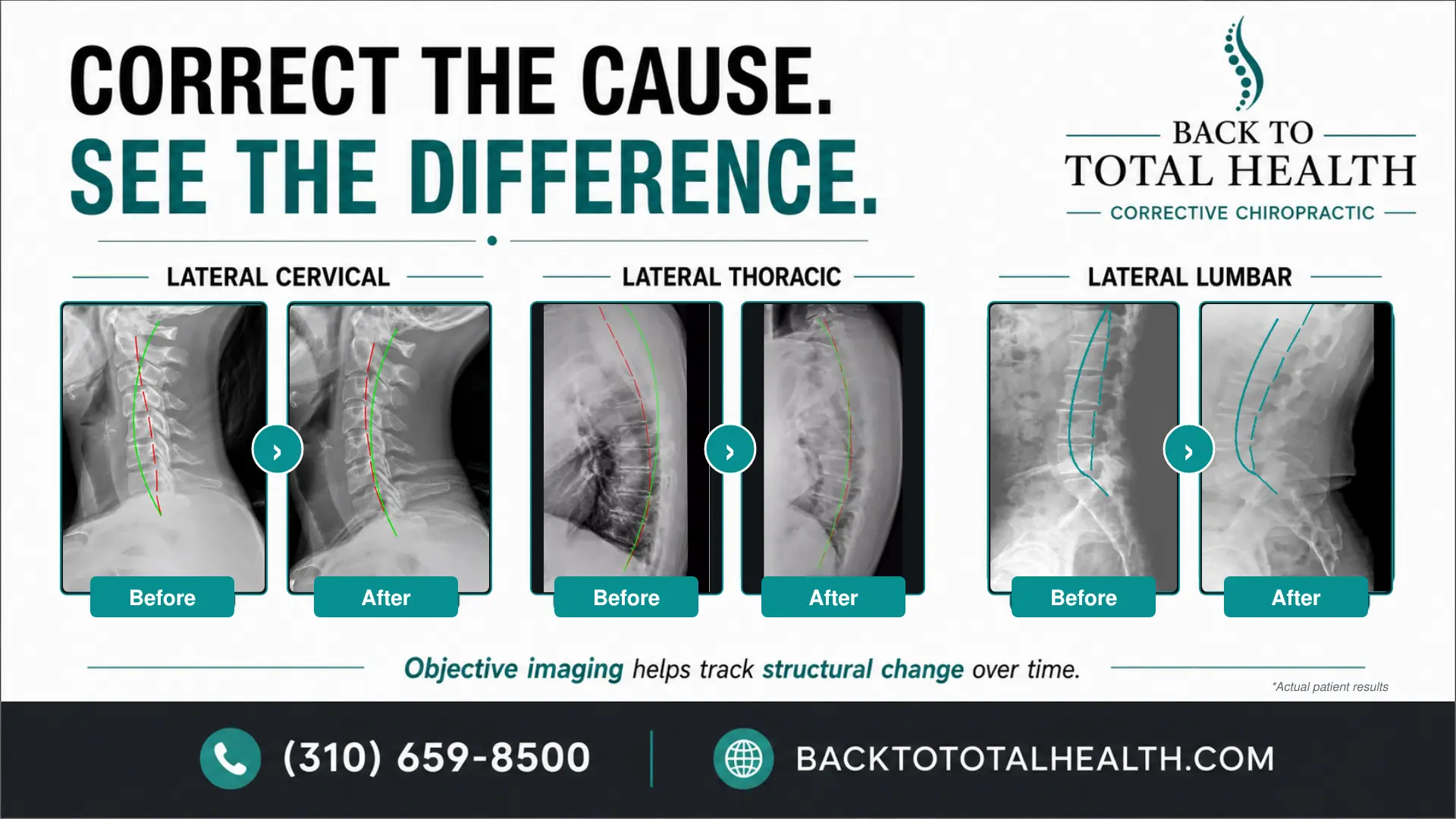
Actual patient results
Structural care begins with objective findings. Comparative imaging can help evaluate change across the cervical, thoracic, and lumbar spine.
Individual results vary. Images are educational and do not guarantee a specific outcome.
Comparative studies
How progress is evaluated
Not every patient requires imaging. When it is clinically appropriate, findings can provide another objective way to assess the plan.
Examination, posture, movement, and imaging when necessary define the starting pattern.
Symptoms, function, movement, tolerance, and adherence help guide care over time.
Progress examinations and comparative measurements help determine meaningful change and next steps.
Patient experiences
Selected feedback from patients of Back to Total Health. Names are shown as first name and last initial only.
“Dr. Shirazi, DC is the absolute best… We had an in-depth look at my X-rays, and he offered solutions. You can’t go wrong by coming here.”— Cristina F. · Google review
“Dr. Bill Bastian, DACM, LAc really knows his stuff. He’s been helping me with chronic pain issues. The combination of acupuncture, herbal remedies, and dietary recommendations has really made a difference.”— Tommy B. · Patient testimonial
“Dr. Eric Swartz, DC and his team are truly the best. They truly find a program that works for you—not one program for everyone.”— Anne E. · Patient testimonial
Patient comments describe individual experiences and do not promise or guarantee a particular result.
Your starting point