Localized low-back pain
Pain may remain near the lumbar joints and muscles or change with specific positions and activities.
West Hollywood · Back pain & sciatica
Understand what is driving the pain—and what can help.
Recurring low-back pain can involve joints, discs, nerves, muscles, movement habits, and spinal alignment. Your care begins by identifying the pattern rather than applying the same treatment to every back.
Back pain is not one diagnosis
Low-back pain may reflect joint irritation, muscular strain, altered spinal loading, a disc problem, nerve sensitivity, or a combination of factors. Sciatica adds another layer because symptoms may travel into the buttock or leg.
We connect your history, neurologic and orthopedic examination, posture, movement, and imaging when appropriate. That gives us a clearer basis for choosing care and for recognizing when referral or co-management is needed.
Explore our CBP® structural approachWhat patients often notice
How symptoms behave during sitting, standing, bending, exercise, sleep, and walking can be as useful as where they hurt.
Pain may remain near the lumbar joints and muscles or change with specific positions and activities.
Radiating pain, tingling, or numbness into the leg requires neurologic screening and careful differentiation.
Sitting, bending, coughing, or loading may aggravate some disc patterns, but examination is needed to interpret them.
Repeated flare-ups can reflect capacity, technique, posture, recovery, or an unresolved structural pattern.
Your evaluation
The first goal is not to force a diagnosis into a treatment—it is to determine the most reasonable explanation and next step.
We review onset, recurrence, work and gym demands, sleep, prior care, imaging, and the activities you want back.
Movement, posture, orthopedic, neurologic, and chiropractic tests help narrow the likely contributing factors.
Digital X-rays may be used when clinically necessary to assess alignment, curves, degeneration, or other structural considerations.
We review findings in plain language and discuss care options, expected checkpoints, and alternatives.
Personalized care
Some patients need mobility; others need stability, decompression, structural correction, or a coordinated combination.
Targeted care may improve joint motion and reduce mechanical restriction when appropriate.
Exercises are selected to improve control, strength, tolerance, and confidence rather than simply adding more movement.
Chattanooga DTS may be incorporated for appropriate disc-related or radiating symptoms after candidacy screening.
Corrective traction and posture-specific work may be recommended when alignment findings are relevant to the problem.
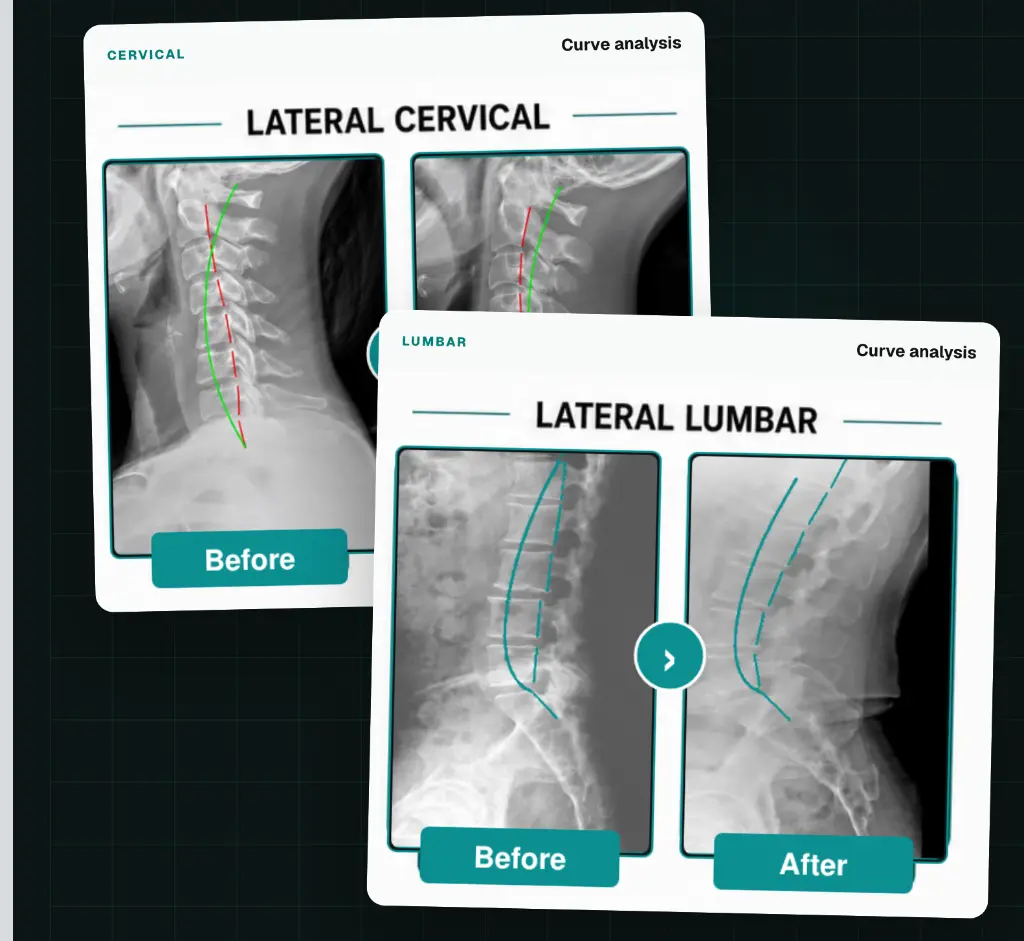
Objective findings
Improvement is more meaningful when it shows up in the activities that matter—sitting, sleeping, training, lifting, walking, or working with greater confidence.
Imaging is used only when clinically appropriate. Individual results vary.
Is this the right next step?
An evaluation can help when the back problem is persistent, recurrent, radiating, or difficult to manage with basic self-care.
Clinical review
This page reflects the evaluation and treatment approach used by Dr. Sam Shirazi, DC and Dr. Ali Pourpezheshege, DC at Back to Total Health West Hollywood.


Common questions
No single treatment is appropriate for every cause of back pain. We first evaluate whether symptoms appear mechanical and whether chiropractic, rehabilitation, decompression, co-management, or referral is appropriate.
No. Sciatica generally describes symptoms traveling along the sciatic nerve distribution, often into the buttock or leg. Low-back pain can occur without nerve involvement.
Not automatically. Digital X-rays are considered when your history and examination indicate that structural imaging would meaningfully affect diagnosis or recommendations.
That depends on the diagnosis and severity. We help identify which movements can continue, which should be modified temporarily, and how activity can be progressed safely.
West Hollywood · Ready when you are
Schedule an evaluation to understand your findings, options, and appropriate next steps.